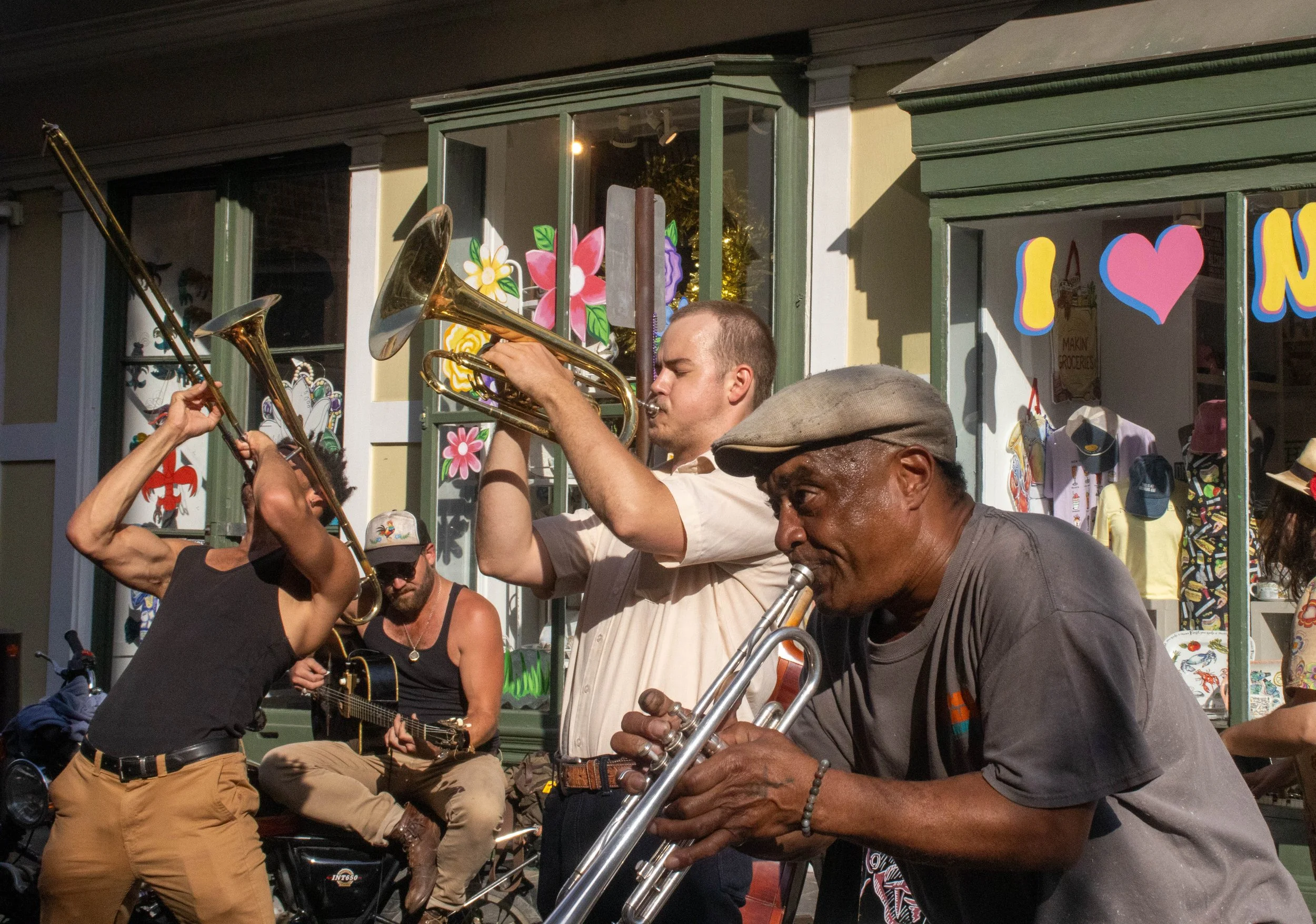
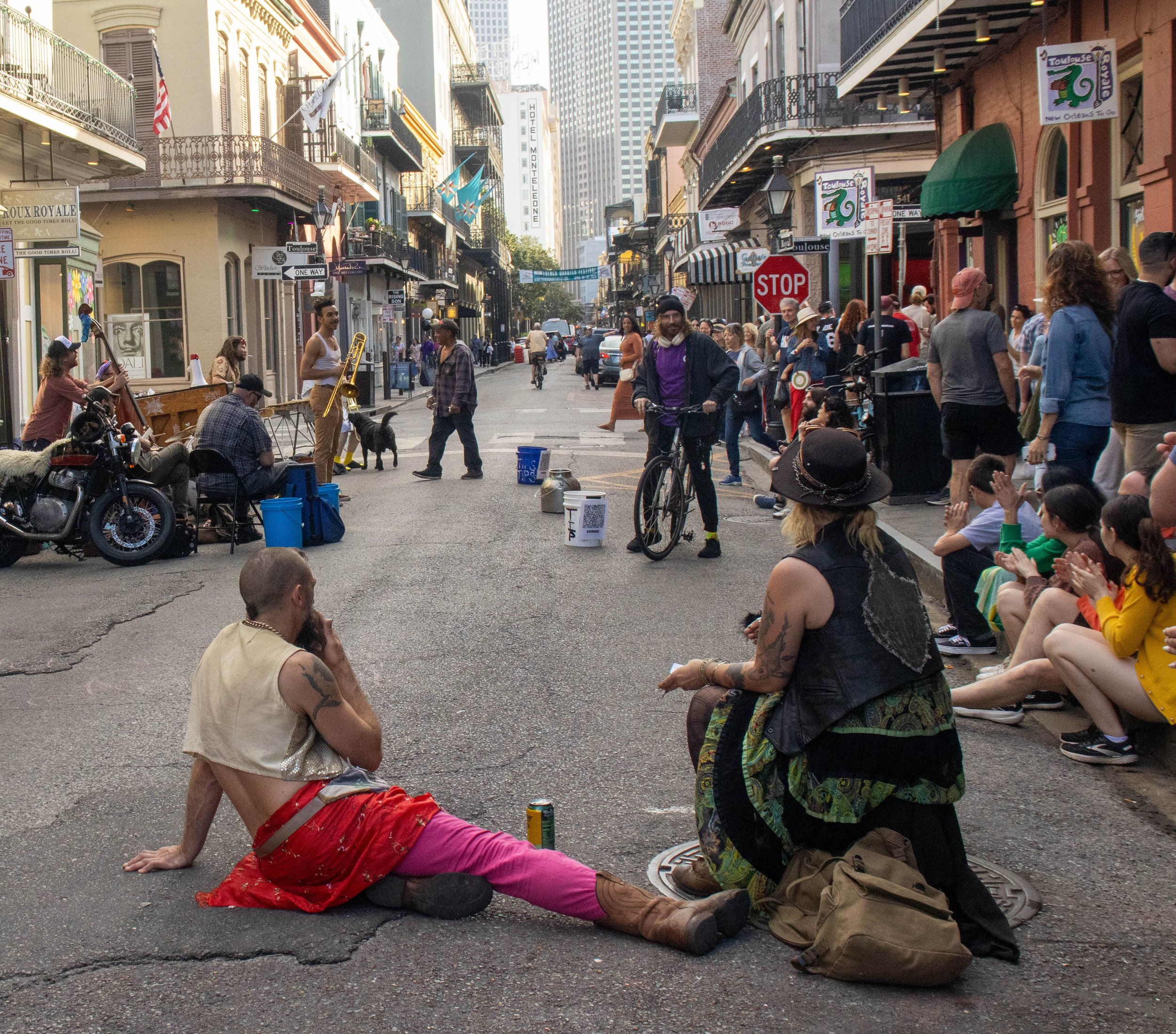
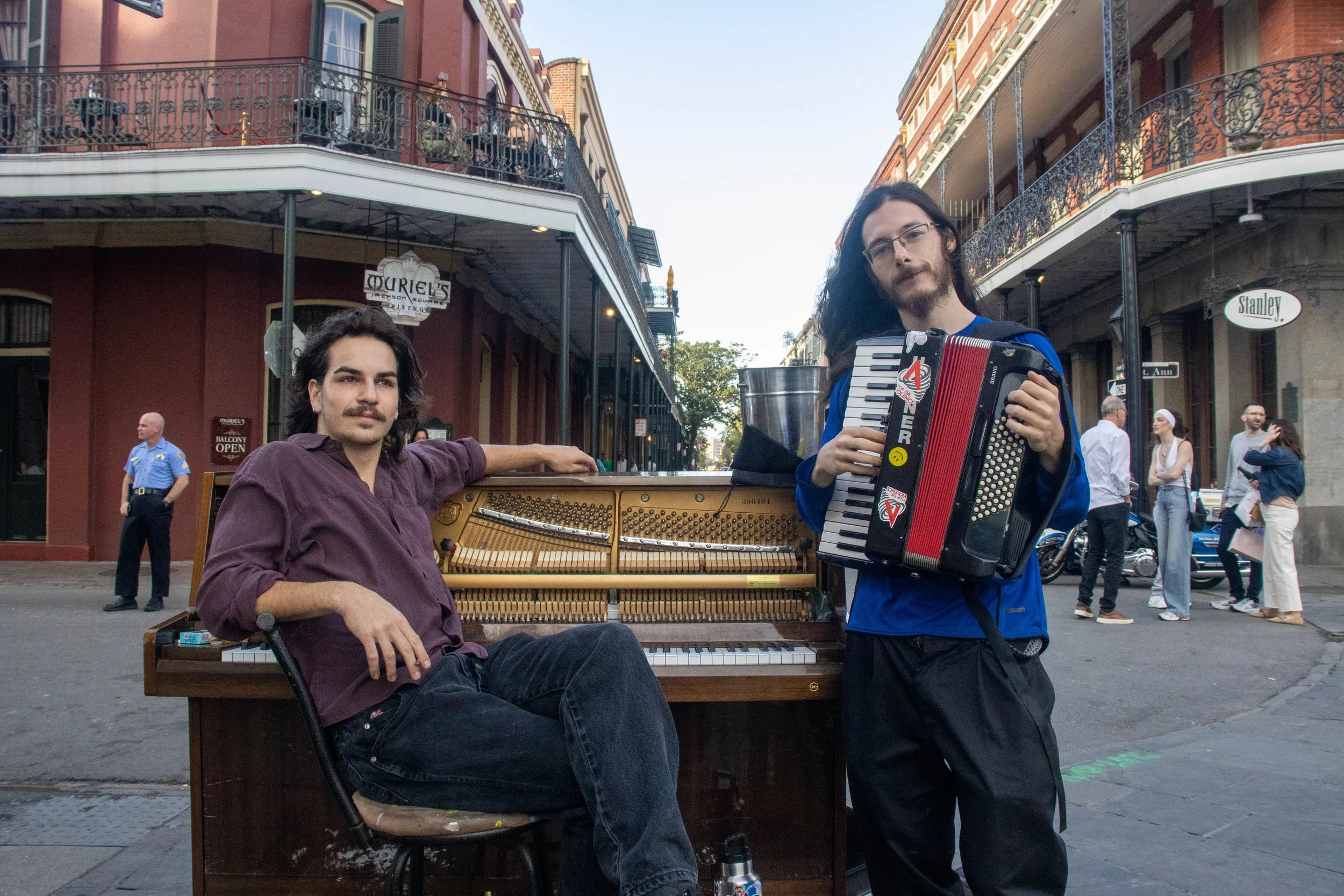
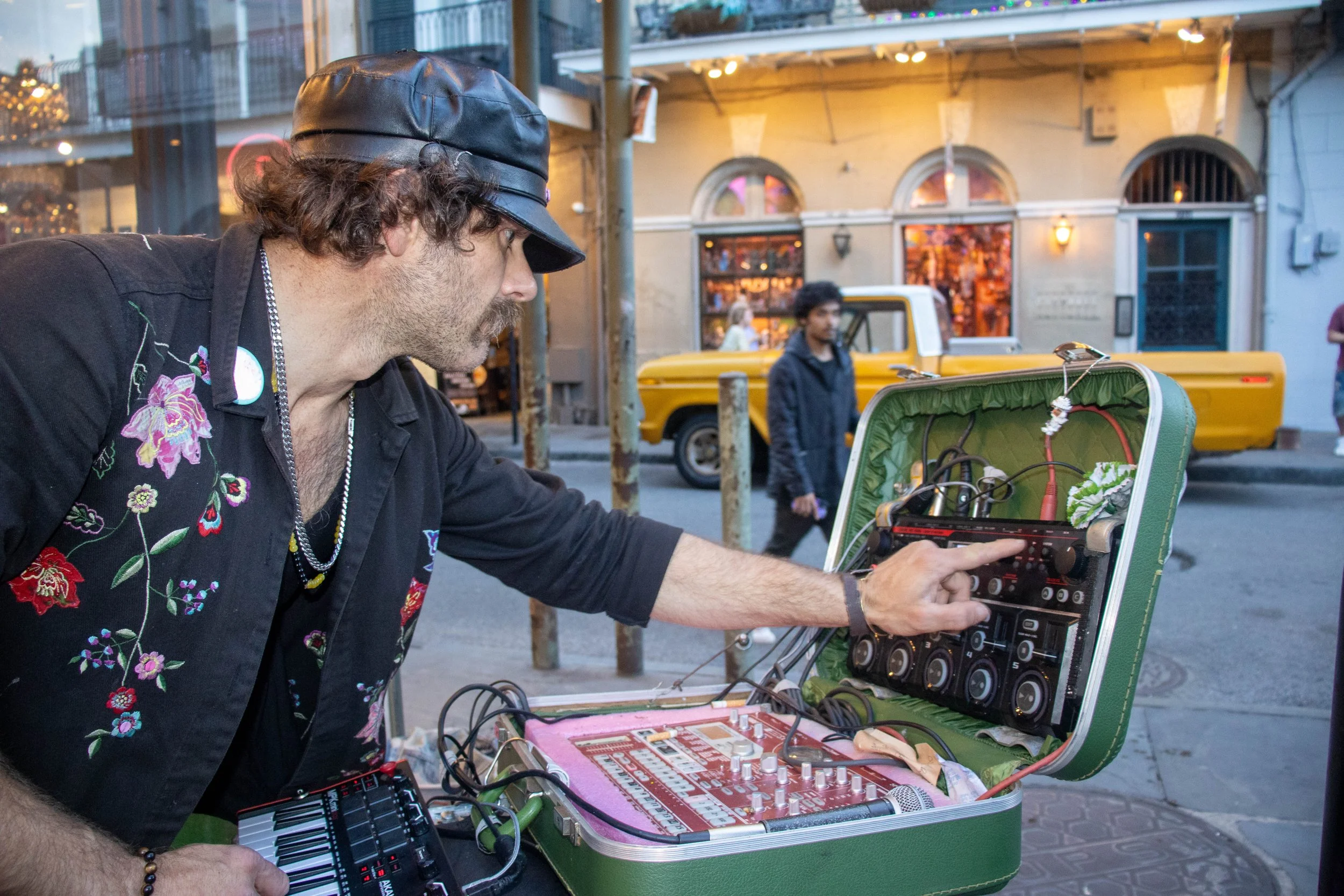
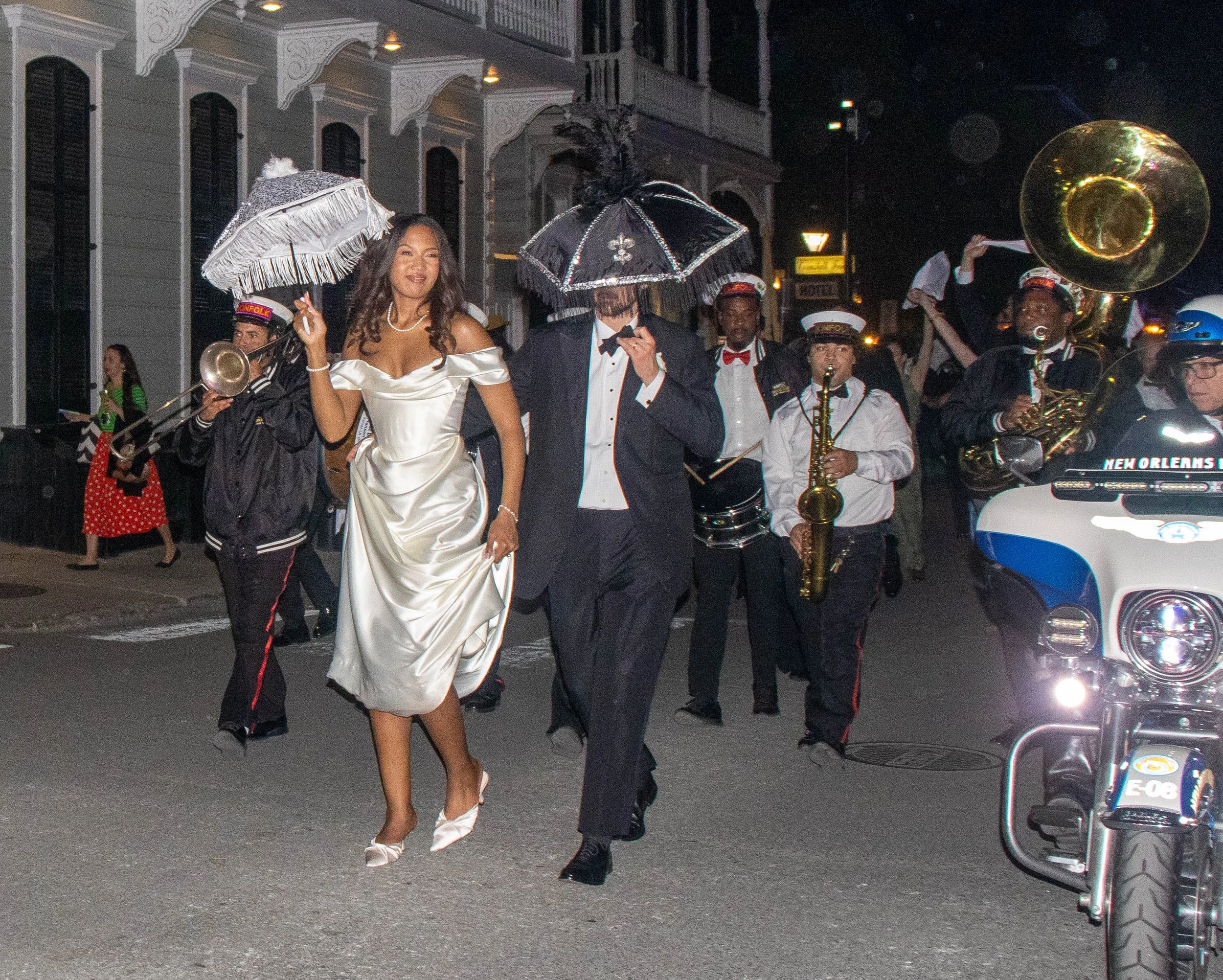
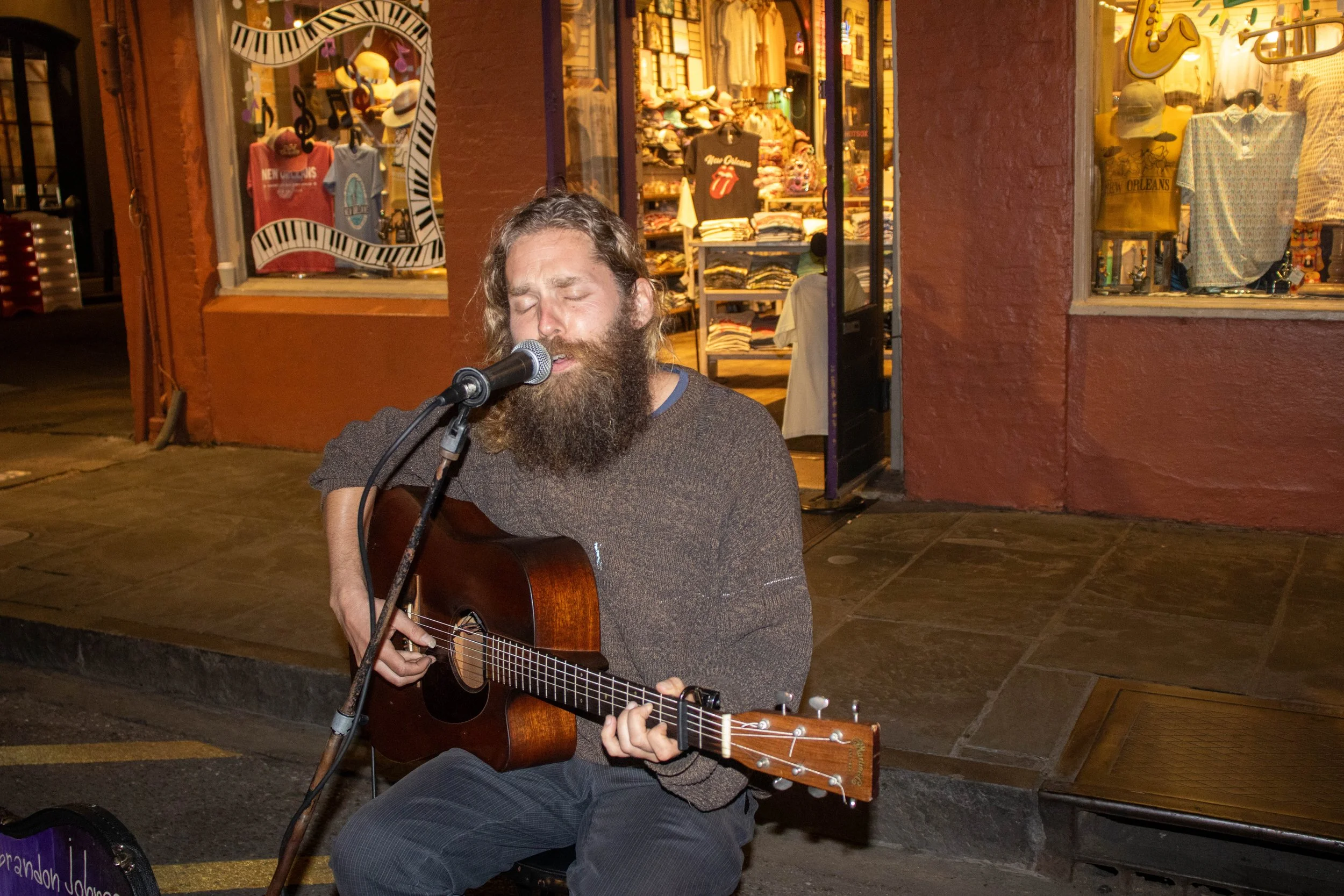
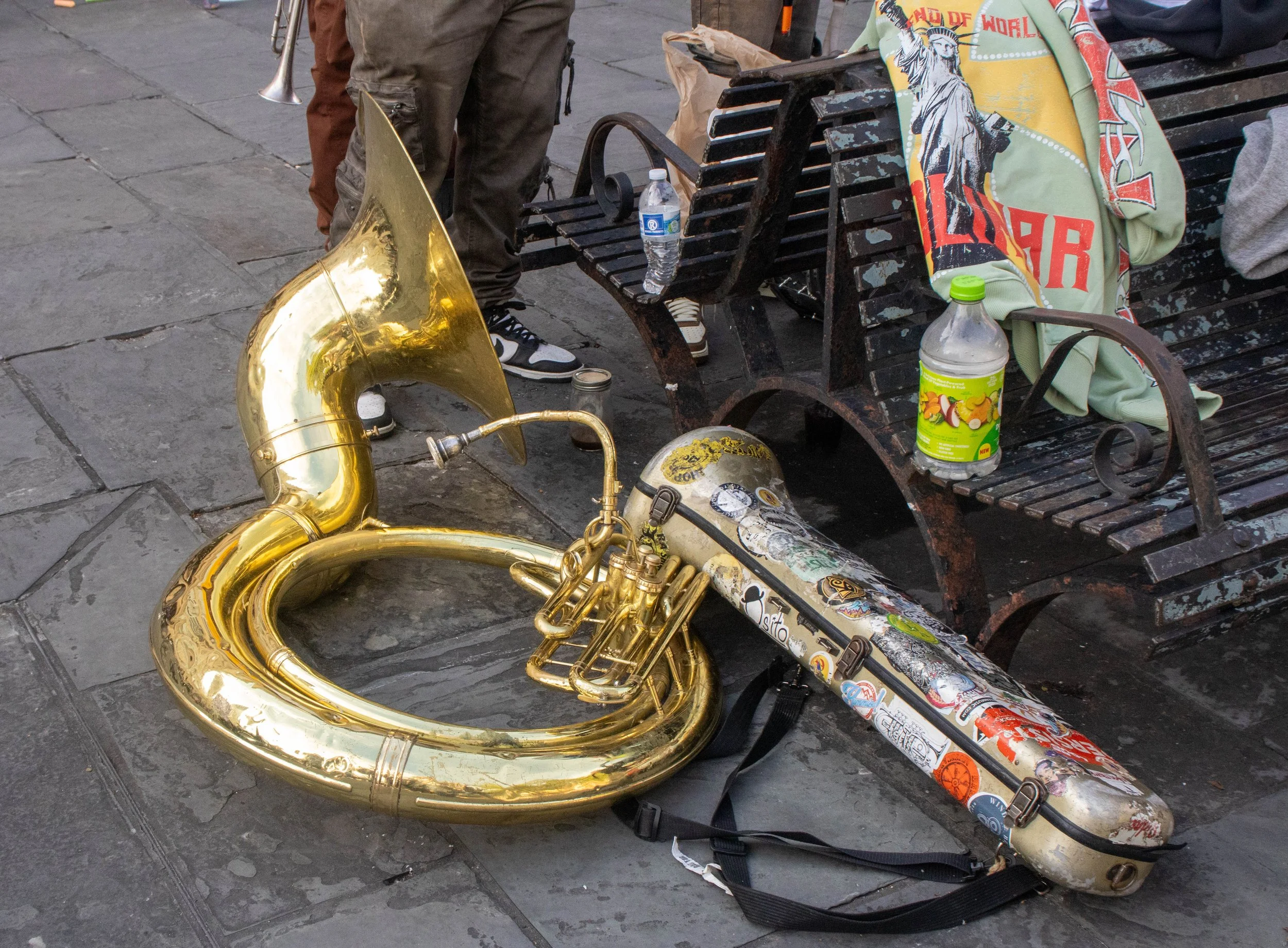
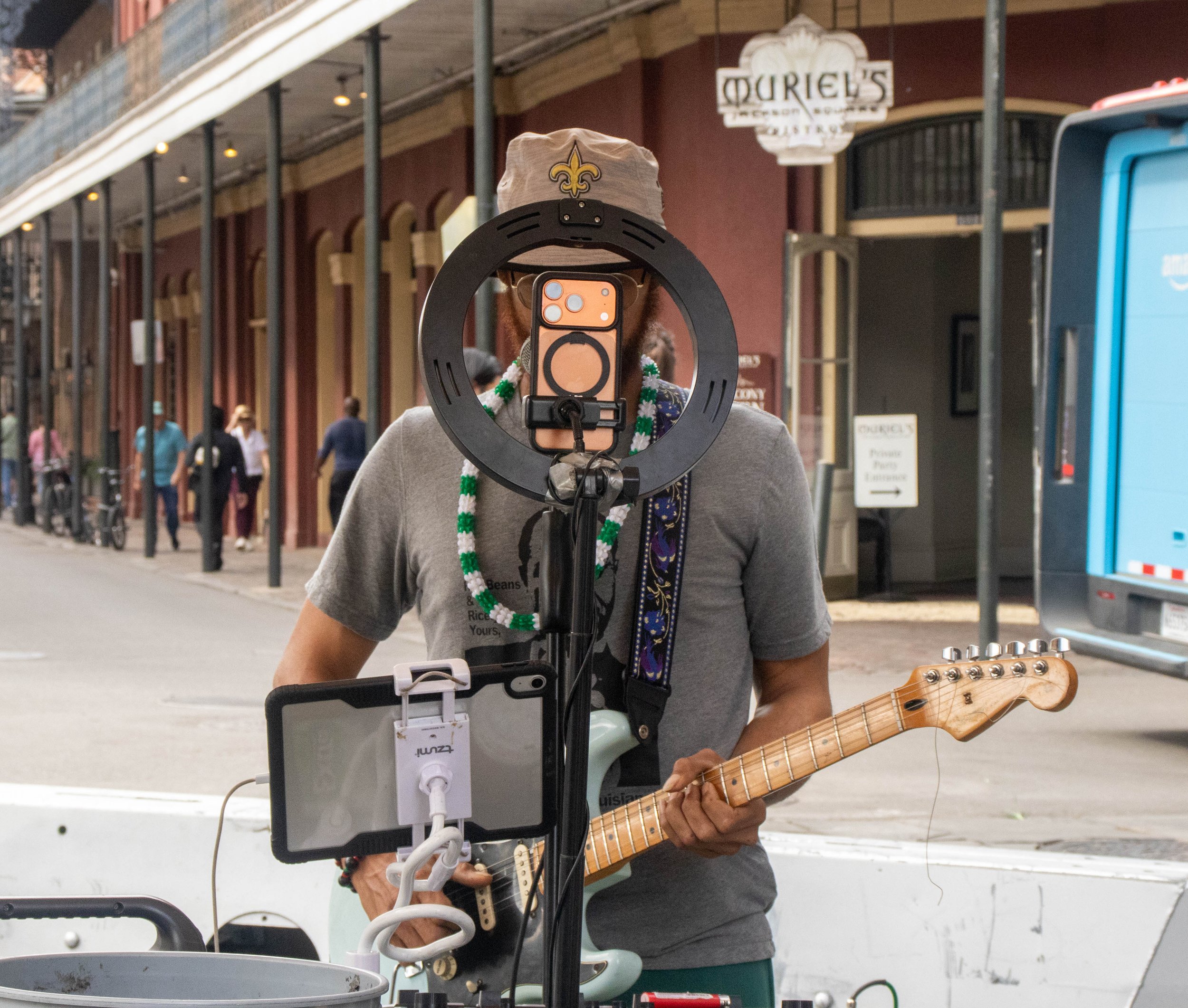
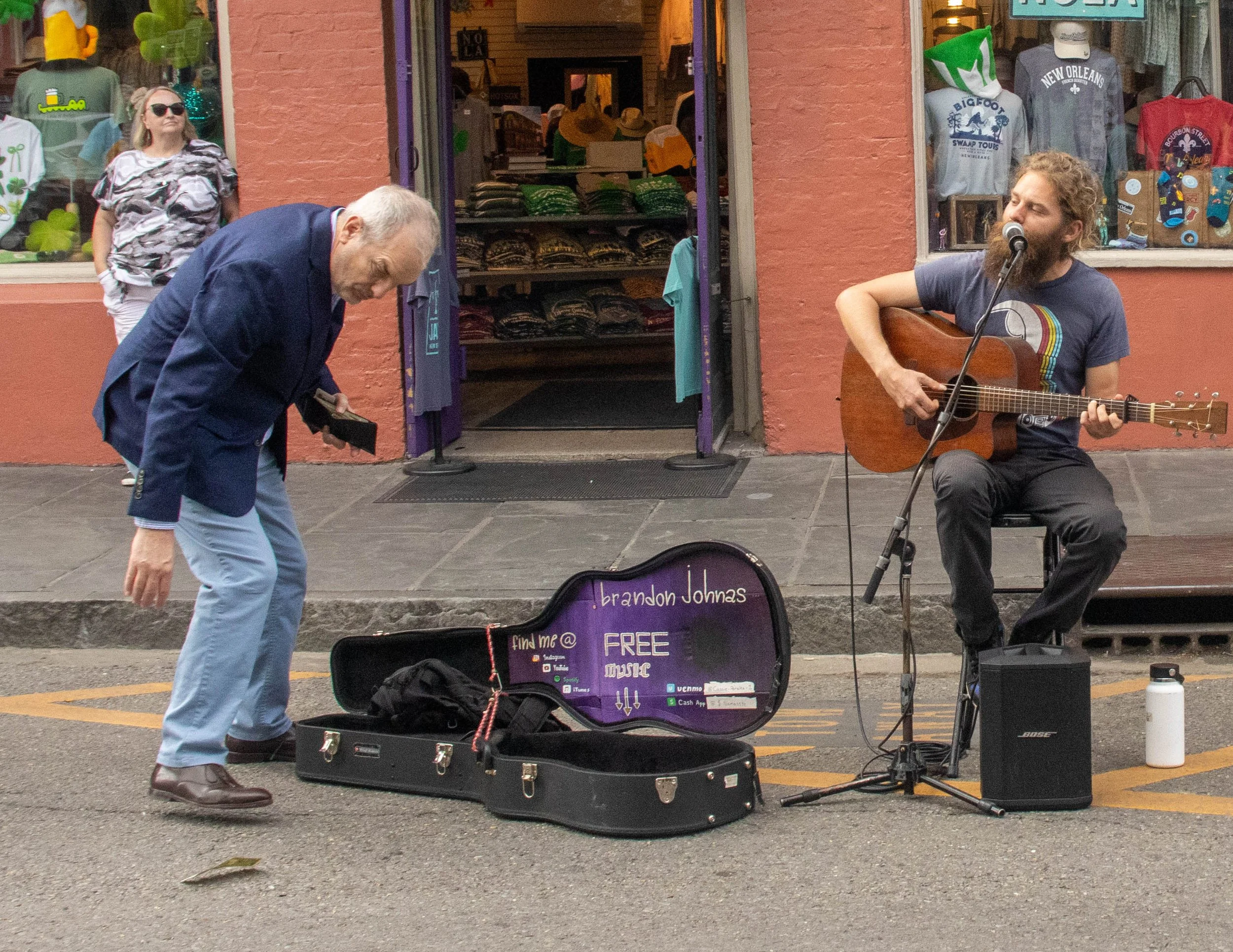
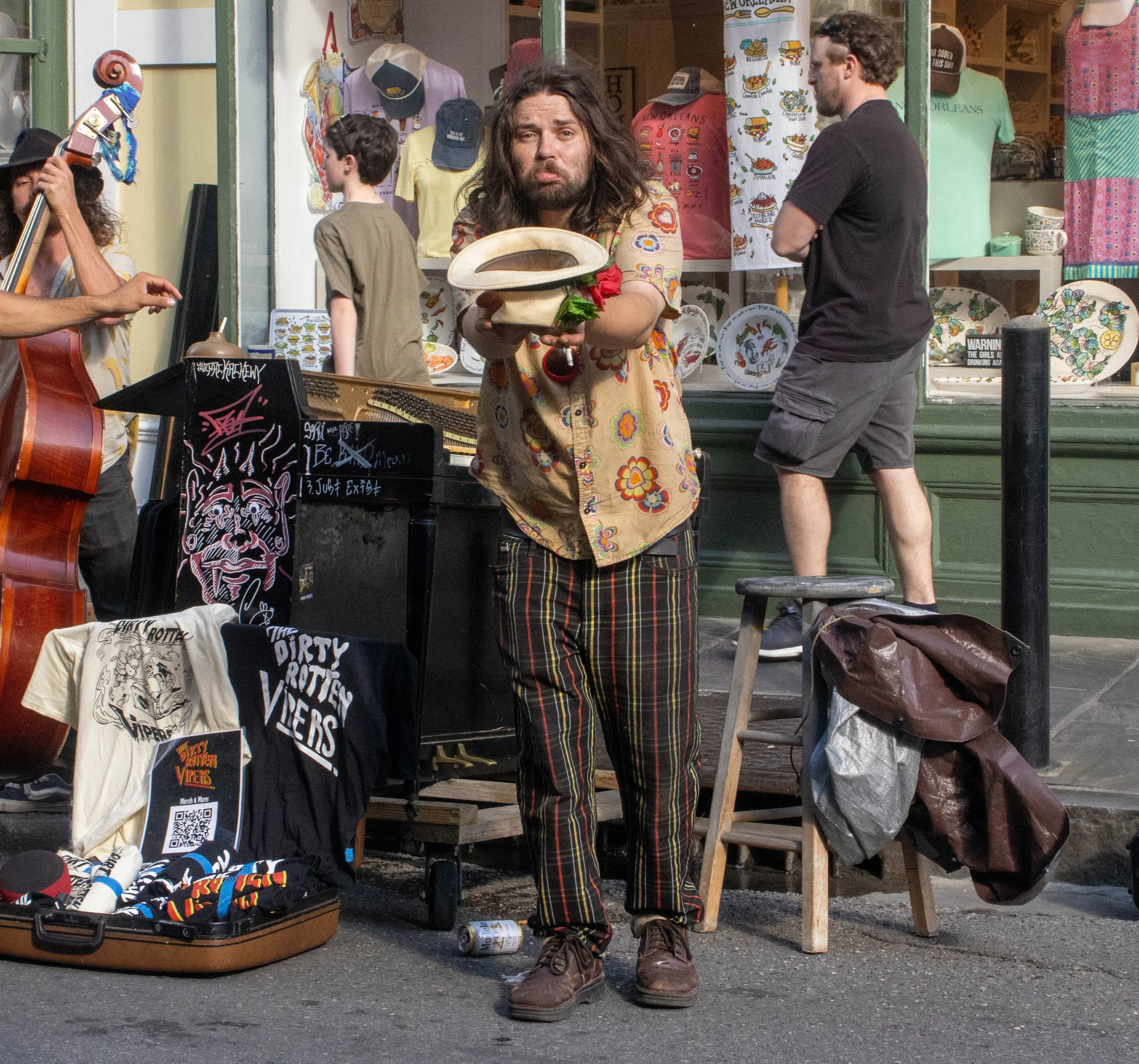
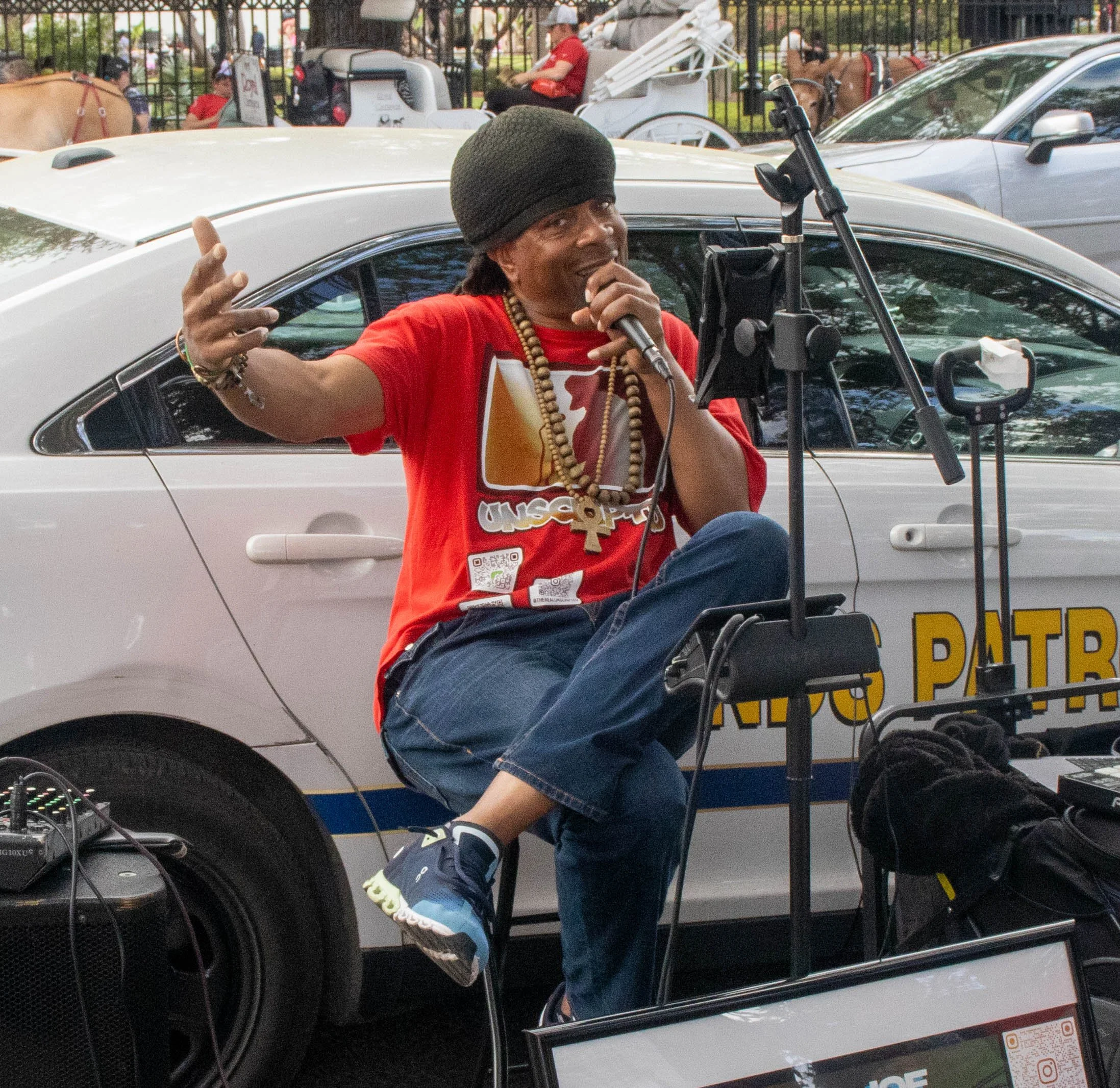
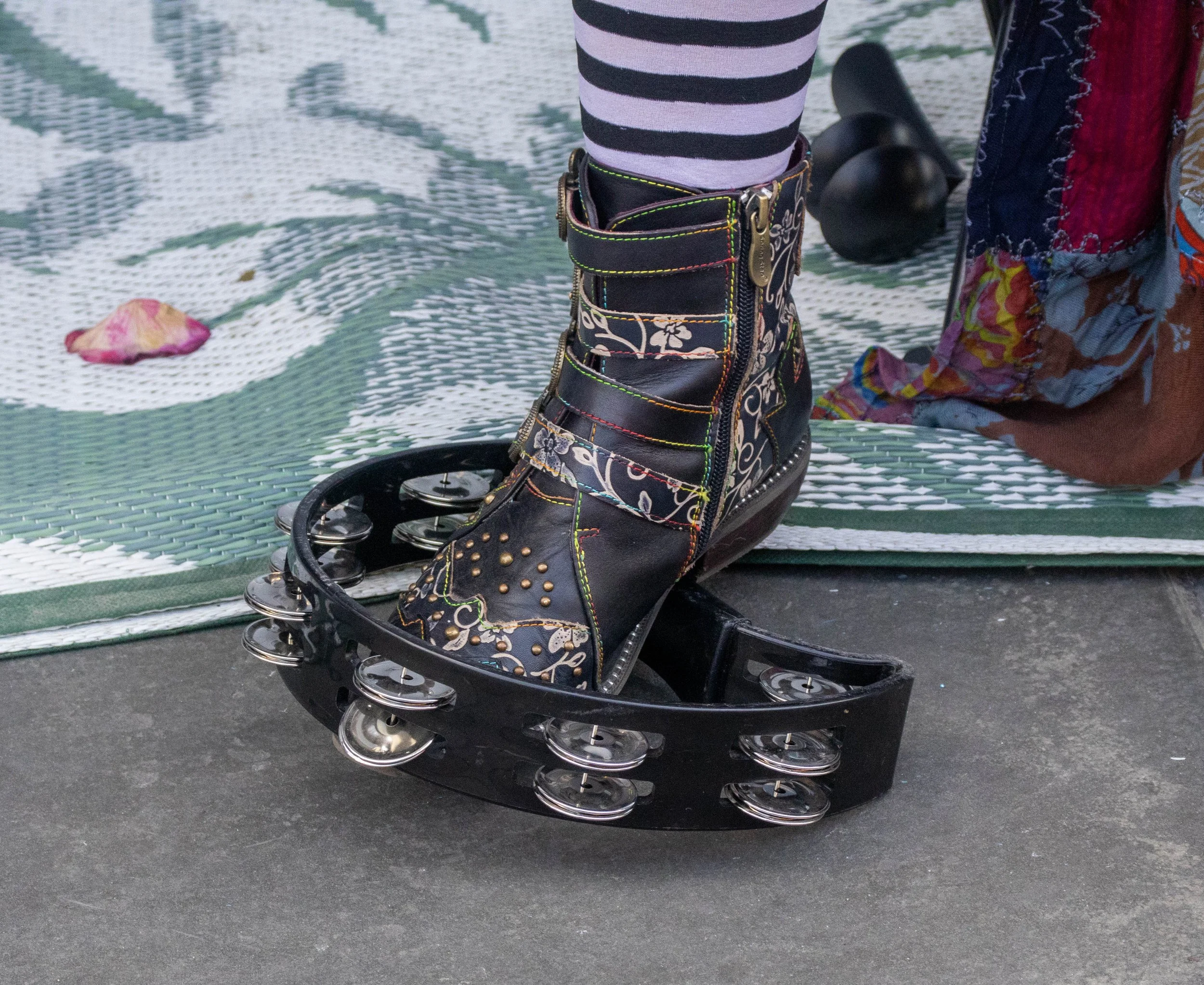
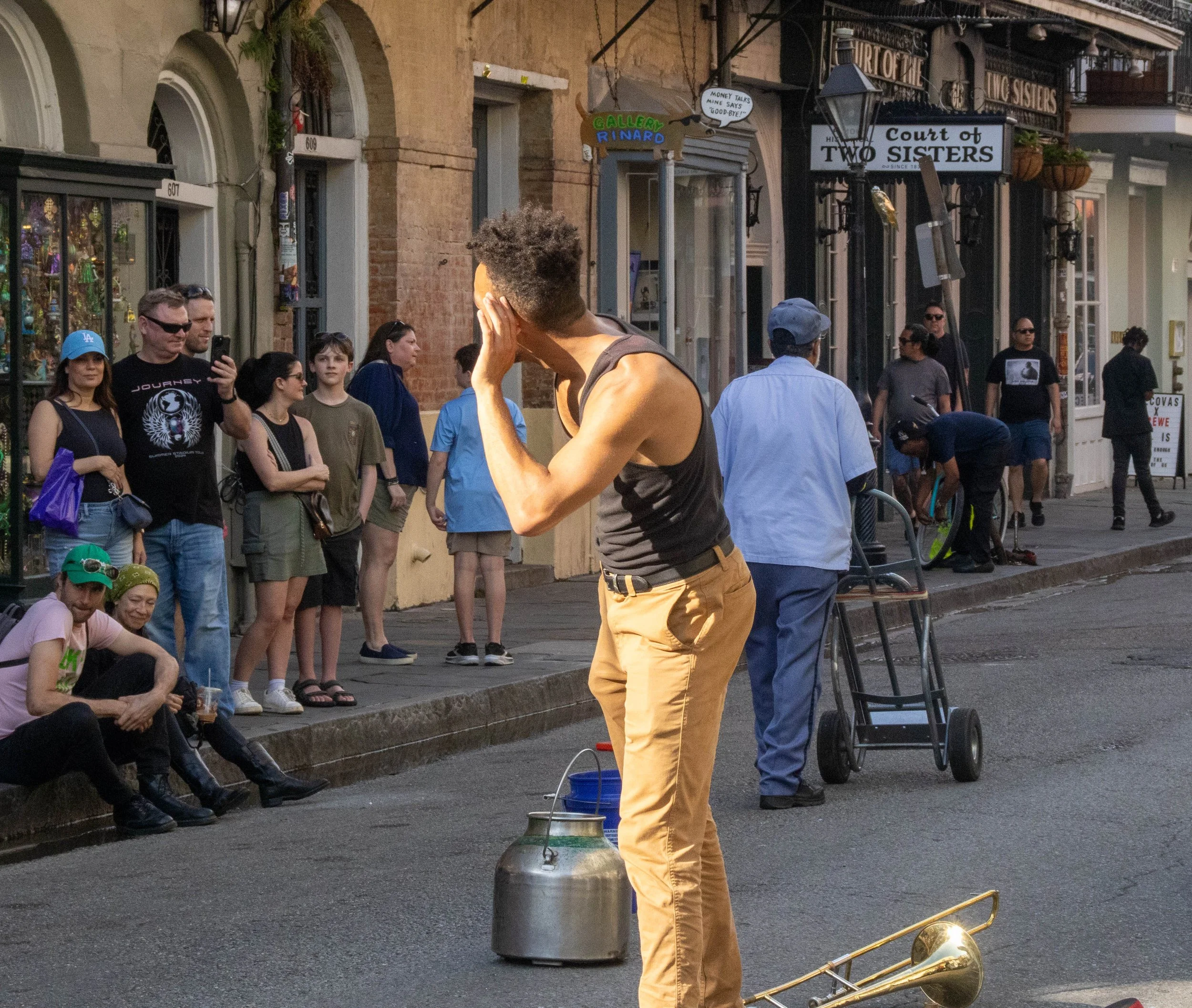
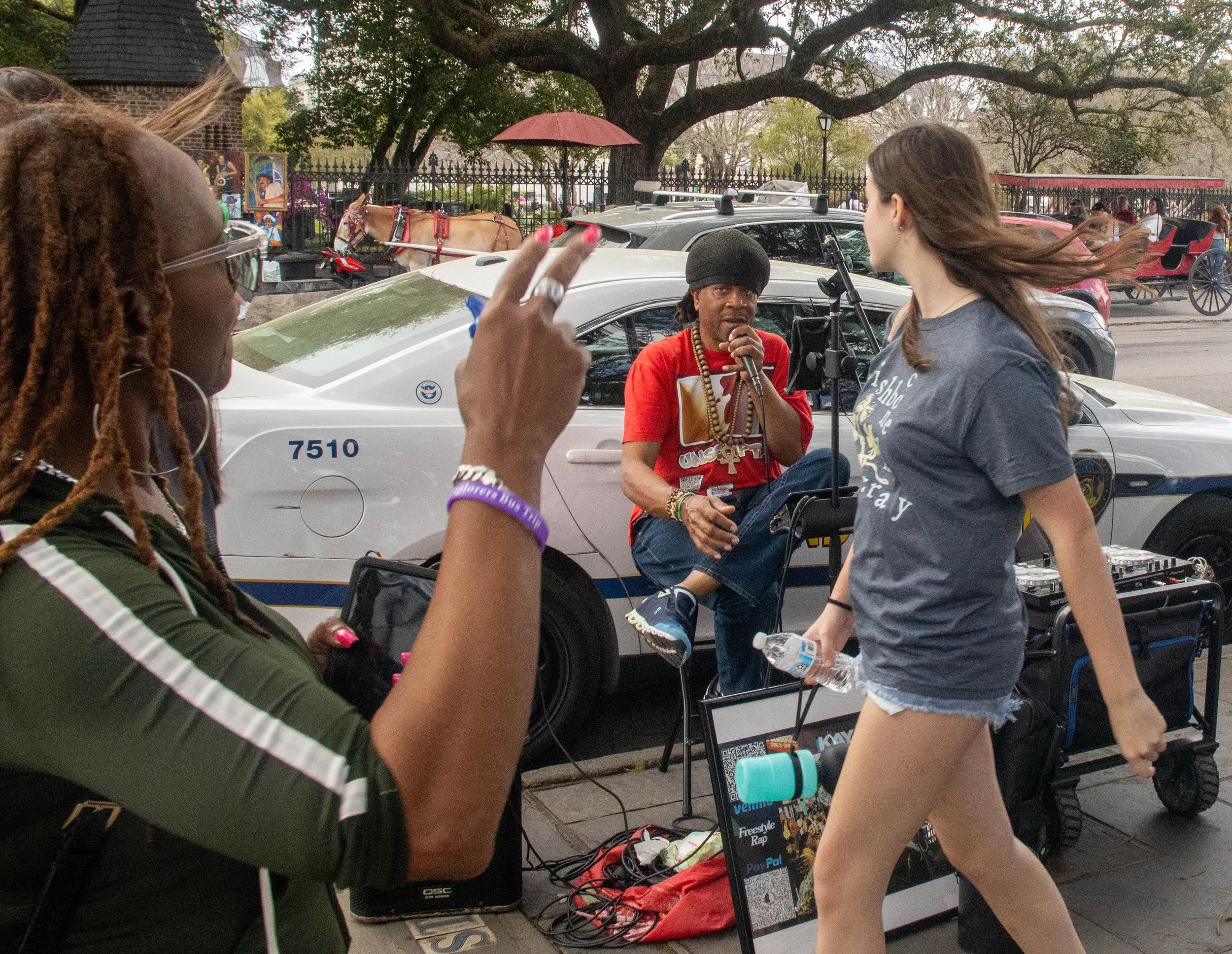
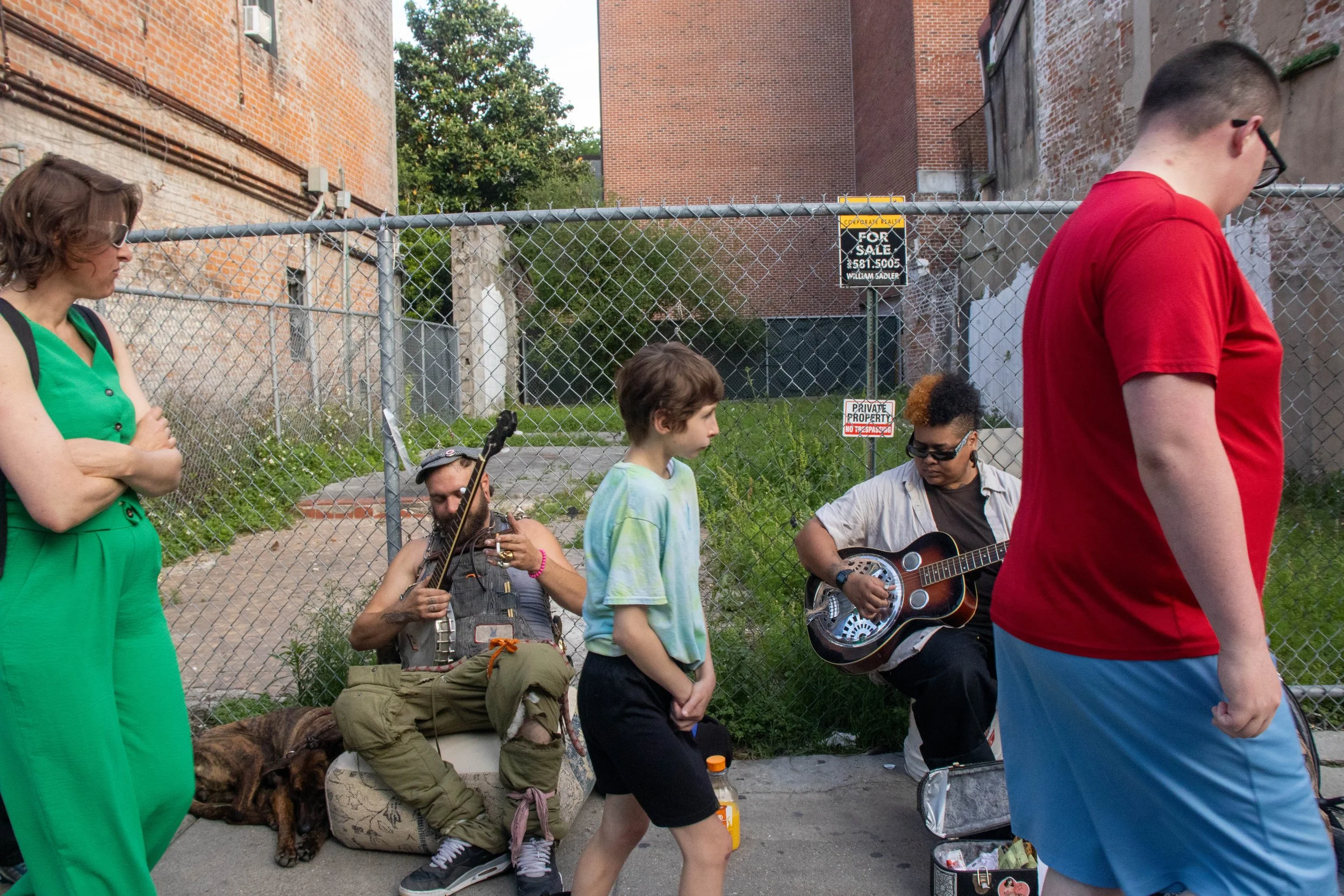
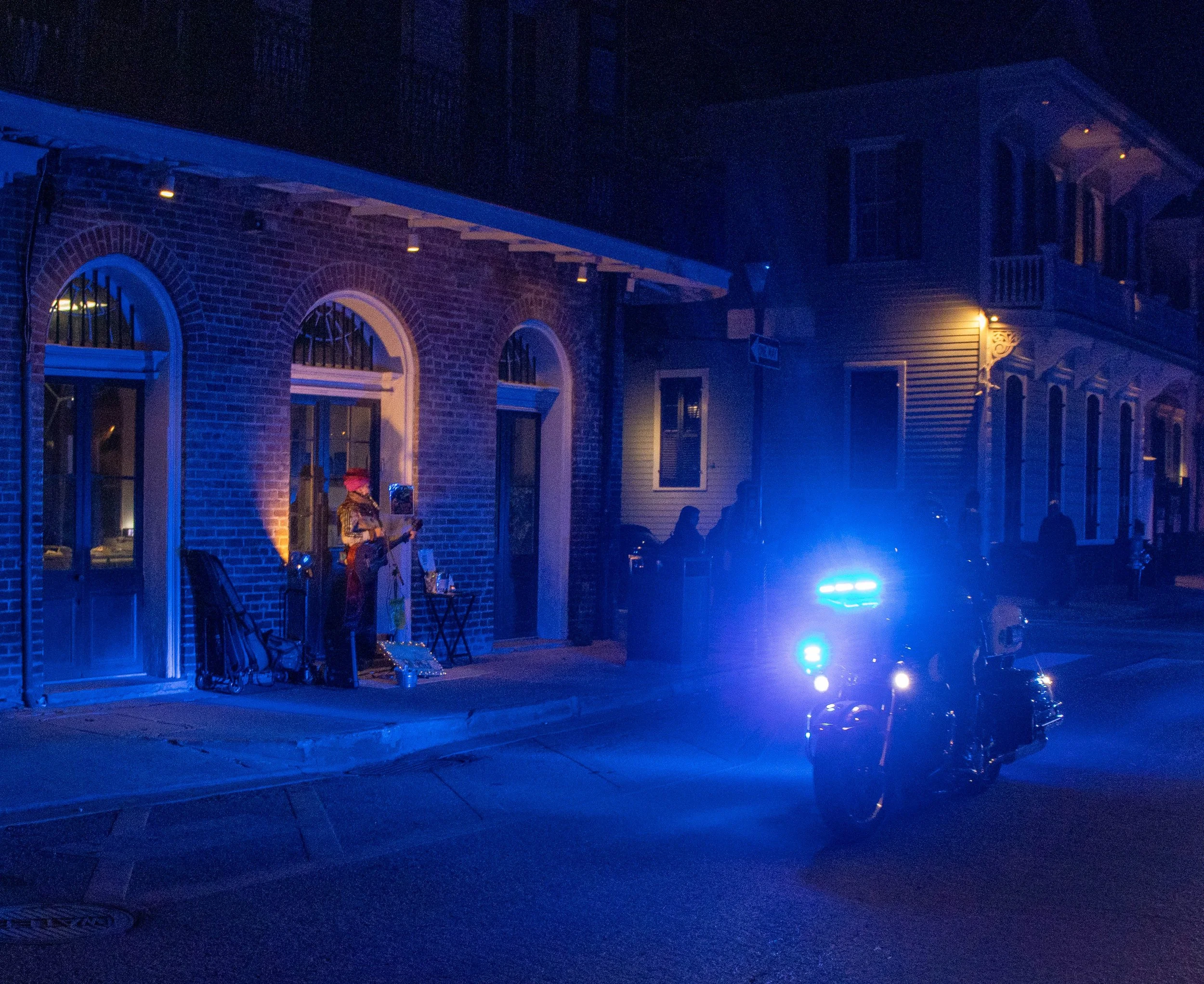
Music has been coming out of the French Quarter since the 18th century. Louis Armstrong had his start busking in New Orleans, just at age 11, playing the cornet. Trombone Shorty starting off playing Jackson Square. So many icons have emerged from New Orleans' busking culture. But what about the people whose goal is street performance? Who has been there for thirty years, in the same corner and with the same instruments? The streets have become the city's truest stage.
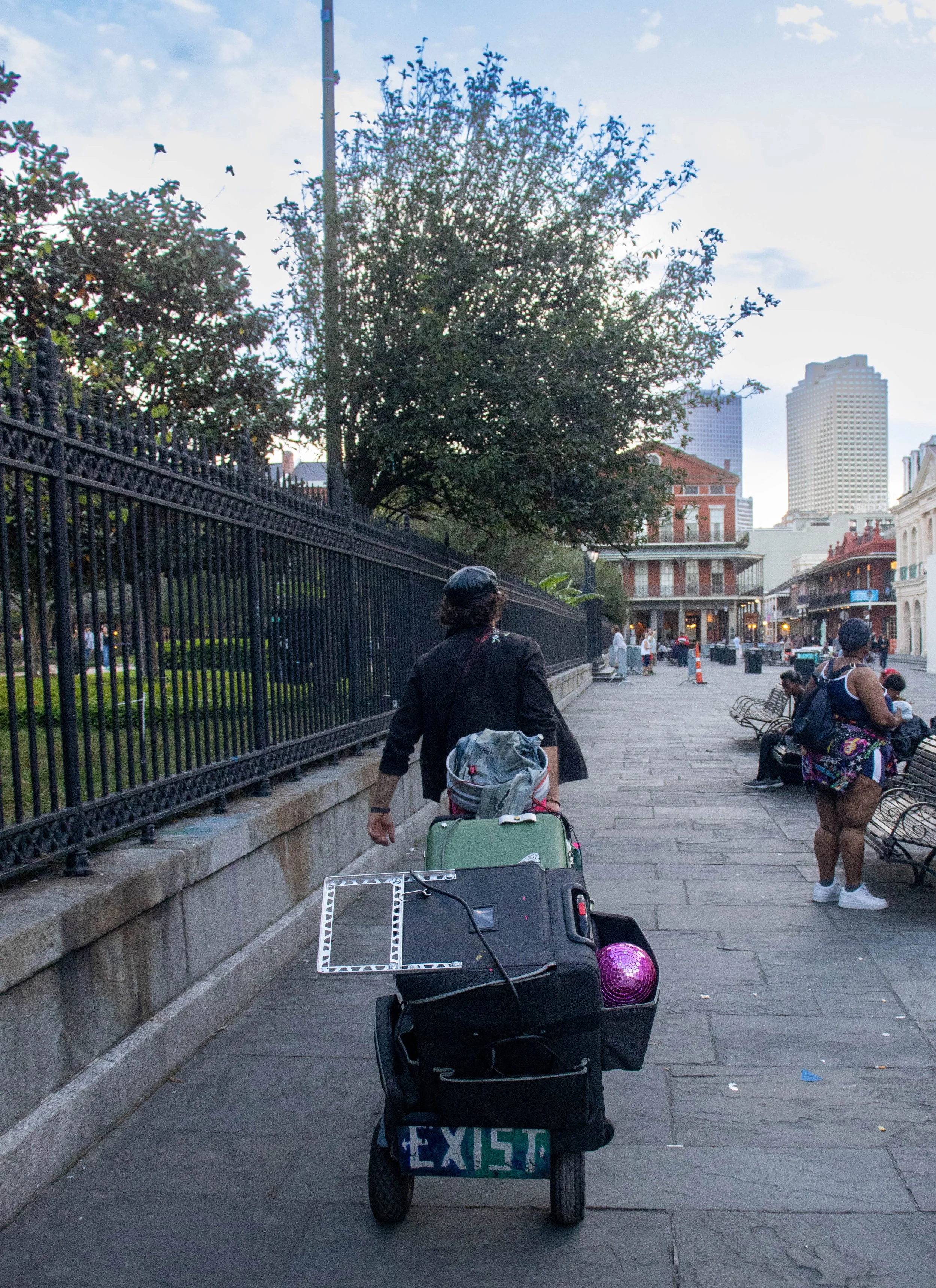
Although New Orleans sells itself on its musical history and culture, the city does not reliably pay all the people who make it. It is a sacrifice to be a street performer, balancing multiple jobs, unsteady pay, and corner disputes on Royal Street. Even in "fat season," Mardi Gras through Jazz Fest, performers can go weeks without real pay.
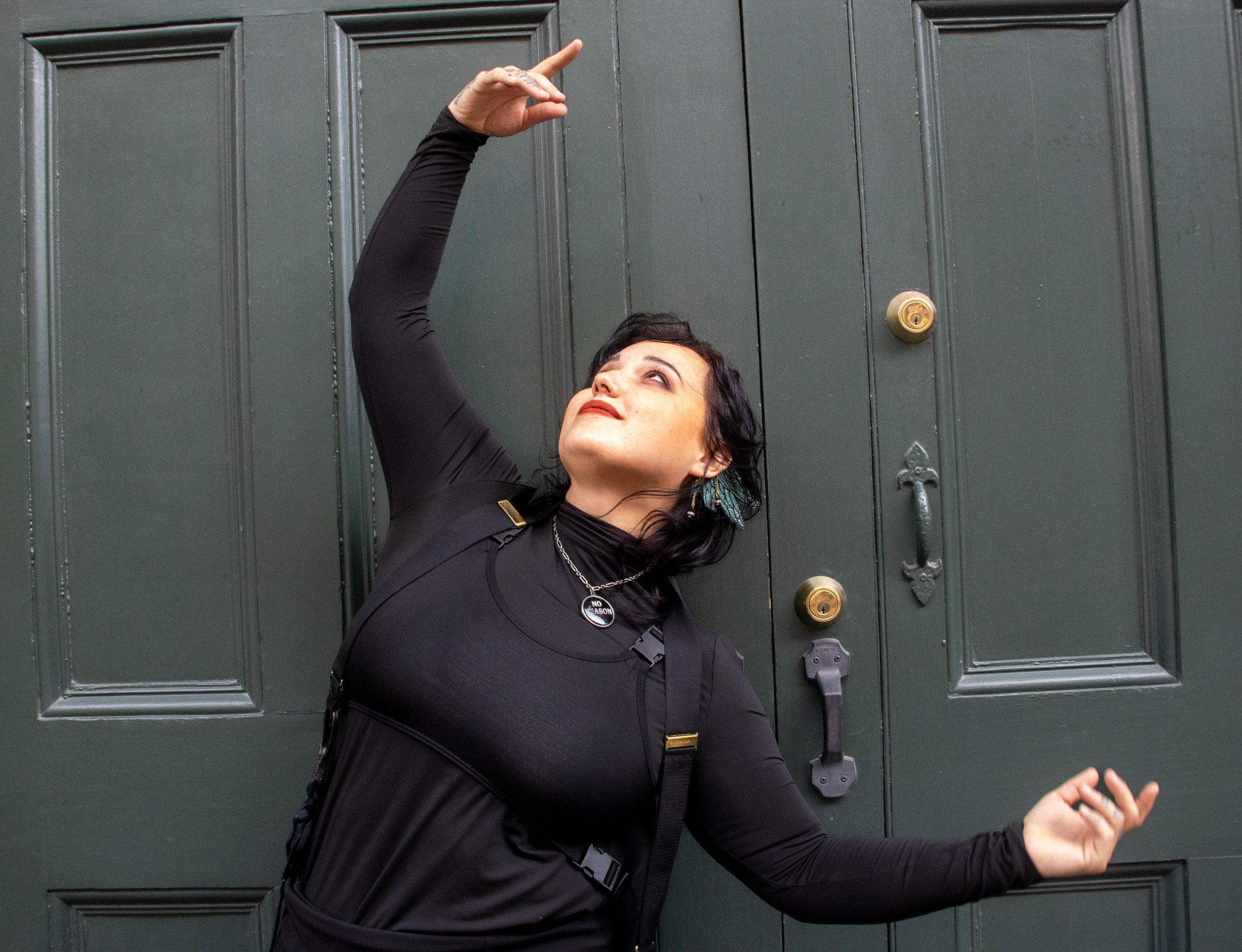
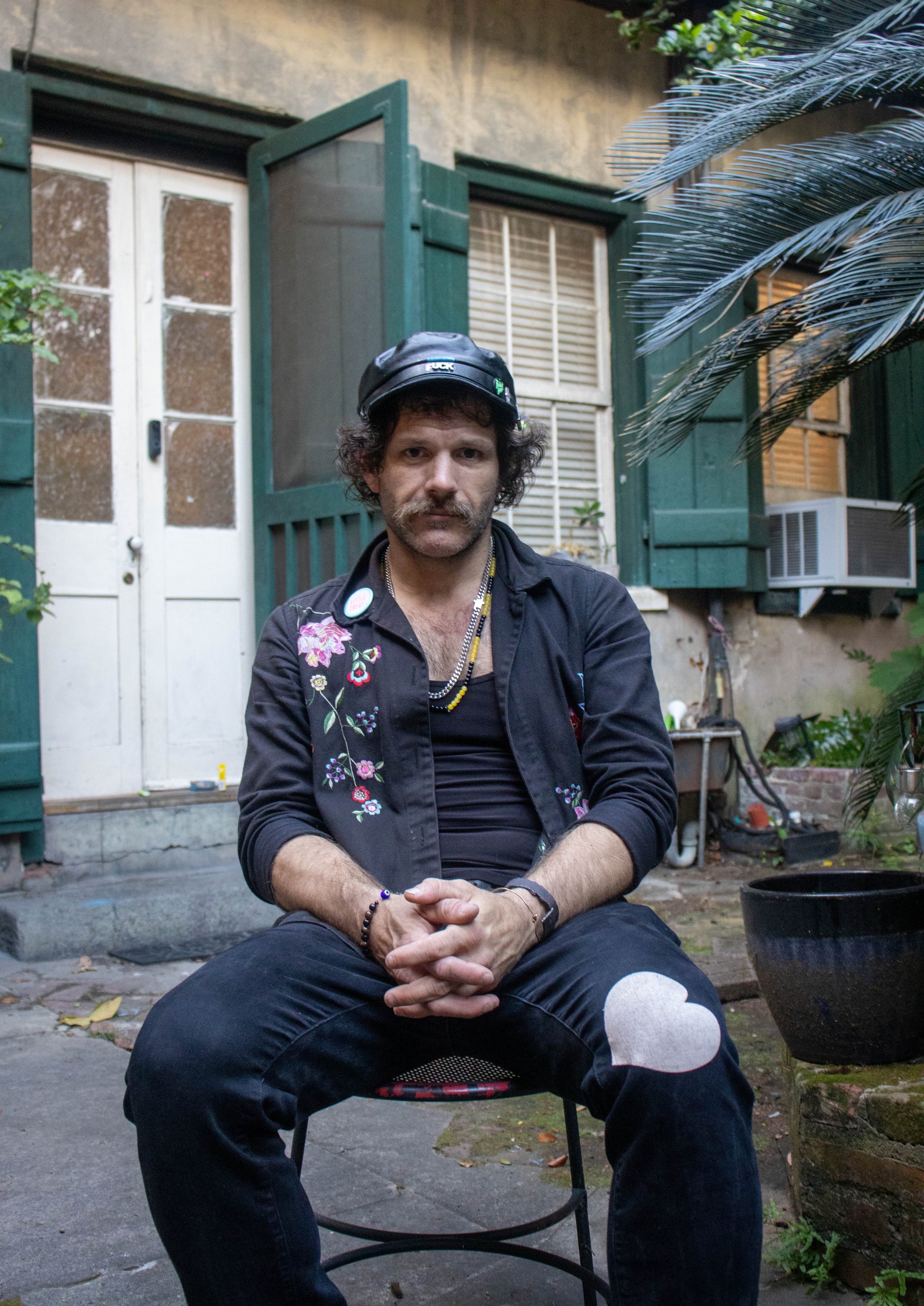
This story follows Elysium, Gabriel Paul, and other French Quarter street performers, examining their experiences and daily practices. But despite these challenges, street performance remains worth it to so many — because it is one of the last places where music belongs to everyone. Street performance is an example of democracy at work: full creative freedom, no algorithm blocking you from being heard, no ticket to pay for. Music becomes a public entity, something everyone deserves access to, not only those who can afford it. The street is the stage, the audience is the city, and every voice gets a corner. Street performance keeps our community connected, one voice at a time.